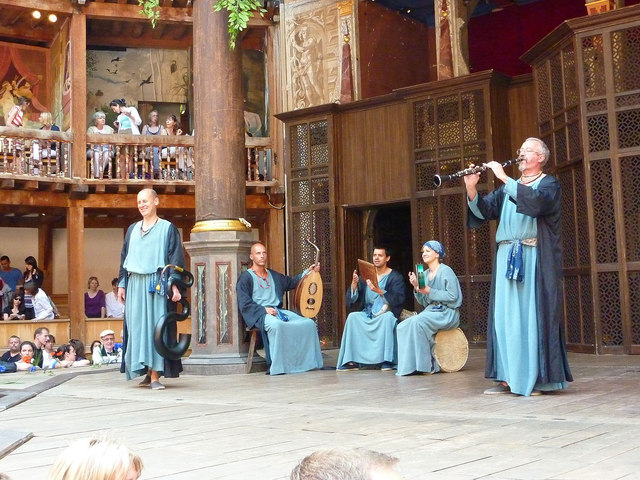
After writing the last post on how our family enjoys Shakespeare, I realized there were a few more things I really thought might be helpful to those of you who are getting your feet wet. Let it be clear from the start, I am not a Shakespearean authority by any stretch of the imagination. I am simply a homeschool mom and student of Charlotte Mason who is trying to share information that I wish I had known sooner… my intention is never to overload or overwhelm but rather to share. Sometimes I get a little to enthusiastic in my sharing so feel free to divvy this up into smaller portions and wade through it a little at a time…Ready? Let’s get started!
Types of Plays: Up until this year, I erroneously thought that all Shakespeare plays could be divided into two categories: Comedy and Tragedy. I also mistook the meaning of the term ‘comedy’ rendering it with the contemporary definition of humorous, rather than signifying a work where not all the characters die at the end. Dante set me straight on that. To be sure some of the comedies are actually quite funny, “Twelfth Night” comes to mind, but many are just adorned with the proverbial “happy ending” for which most Americans have a natural penchant.
When I realized there was a third category, aptly dubbed historical plays, and discovered these works record both ancient and contemporary history (relatively speaking, that is, to Shakespeare), I was excited to work in a few of them before my son graduates next year. Here is a list for your perusal. Keep in mind, that it isn’t always easy to categorically place Shakespeare’s plays into neat categories, as he did tend to blur the lines.
Cultural categories: On top of all that, thanks to Asimov’s Guide to Shakespeare, which as a history buff I have thoroughly enjoyed, I realized that the Bard penned plays representing four distinct cultures: Italian, Greek, Roman and of course, English. So the whole time we have been reading plays, I tried to include one comedy and one tragedy per year but I never considered the culture. Overwhelmed yet? Don’t be.
Involve the Students: If you read one play a term you could do one comedy, one tragedy and one historical play, but as to which culture you choose to focus on, you may wish to involve your students in that decision. Truth be told, you don’t even have to consider the culture at all but if you have a reluctant student who is inclined toward Greek mythology, they may enjoy the Greek plays more than the others. Depending on the age of your students, you could simply offer your them a choice of two plays and see if either of them catch their fancy. Of course there is the very real possibility that you will have to in engage in some referring if an agreement can not be reached between siblings but in reality, some students are noticeably more engaged when they have a say in the matter.
Don’t rush the process: I know from past experience with some Mason curricula and from Mason’s old PNEU journals that one play per term was the norm. We found that didn’t meet our family’s needs and we felt rushed; we pared it down to two plays per year. If that is too much for your family, you could do a single play or you could even save the play for the summer break and then go all out with scenery and costumes galore! If there is discord as to who is going to play MacBeth or Hamlet the issue may be resolved by rotating roles by the Act. And if you need help keeping track of all the characters, Rebecca at A Humble Place has some great suggestions on how to do this!
Recruit others: Another tool which may help engagement is to extend an invitation to neighbor kids or cousins to participate. This does not have to be a formal co-op setting (though some co-ops do opt to offer a yearly play); offer a simple backyard Shakespeare Club to fend off the summertime boredom blues that tend to arrive about two weeks after school lets out. Budding thespians can take the makeshift stage while the artistic enthusiast can paint scenery or scour Good Will for costumes. Need a soundtrack? A couple of new albums found on Spotify or itunes (here and here) boast recordings of folksongs found through the various plays (be sure to check out the accompanying notebooks to each album for a guide to which songs appear in various plays). The possibilities are immense and varied–everyone’s talents are needed.
Just Breathe. Comedy, Tragedy, Historical. Greek Roman. Italian. English. There are lots of decisions to be made here, as well as some to forego. Some plays are more appropriate for younger students (The Winter’s Tale is one that is often touted as a starting point); many of them can be enjoyed with older ones. Embrace the tension: do a little research, peruse your library for copies of the play before you buy or ask other homeschooling families for their recommendations. Enlist all willing helpers (and yes, maybe even some reticent ones): The first step is always the most difficult. But whatever you do, do not run the show. Remember, “All education is self-education.” While considering age and skill levels, encourage the students to do what they can to take ownership of the play while you act as a supportive coach. The experience will mean that much more to them if you don’t do it all.
Behold! An exciting new literary adventure awaits all of you and that is, indeed, something of which to make ‘Much Ado’.
 Decidedly Different